

Best Wood Fence Types for Ultimate Privacy: Complete Guide to Choosing and Installing Wood Privacy Fences
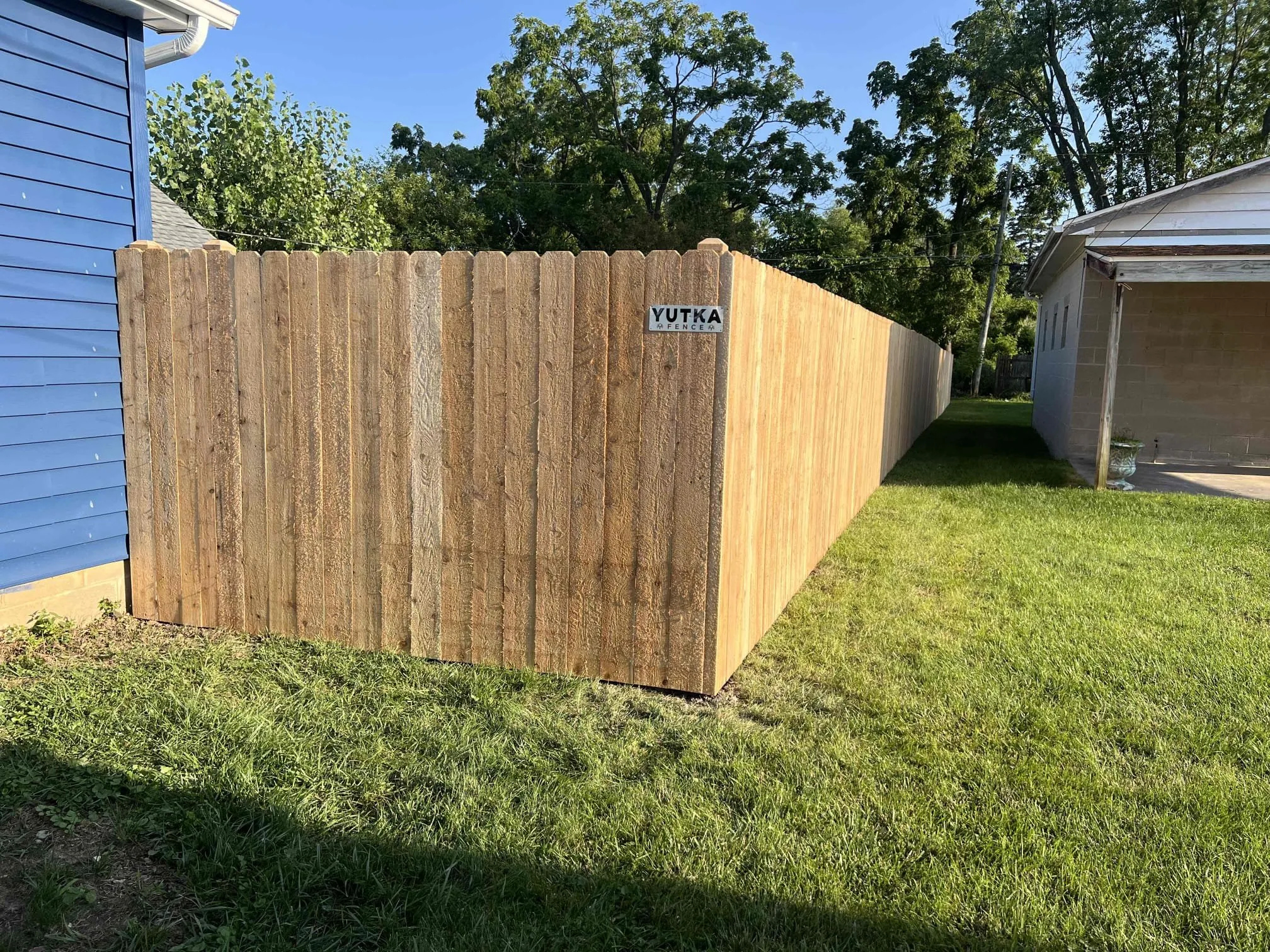
A wood privacy fence creates a quieter, private outdoor space, enhancing curb appeal and home value. This guide explores wood privacy fences, their ability to block sightlines and soften noise, top styles for seclusion, and optimal wood species for various climates. We cover installation, maintenance, construction comparisons, and a checklist to align with your budget, longevity goals, and neighborhood rules. Our goal is to help homeowners select and care for a wood privacy fence that balances seclusion, weather resilience, and style.
What Are Wood Privacy Fences and Why Choose Them?
Wood privacy fences are solid or tightly built wood barriers designed to block sightlines, reduce noise, and define property edges. Their construction, overlapping boards, vertical panels, or tightly spaced horizontal slats, ensures visual access is stopped, and sound is dampened. People choose wood for its customizability, ease of repair, and warm appearance, blending naturally with landscaping. These advantages make wood a leading choice for residential privacy fences, especially in areas with changing weather.
Wood privacy fences deliver several practical, everyday benefits homeowners care about:
- Visual privacy: Solid or interlocking boards keep yards and patios out of sight.
- Security and containment: Taller wood fences deter casual entry and help keep pets and kids contained.
- Aesthetic flexibility: Wood accepts stains, paints, and custom profiles, matching many home styles.
Those benefits translate into usable value: private outdoor living, safer containment for family and pets, and a cleaner street-facing look that helps resale. Next, we’ll explain why we choose wood fences that last.
What Benefits Do Wood Privacy Fences Offer for Security and Aesthetics?
Wood privacy fences enhance security by creating a continuous barrier that reduces visibility and limits easy access. Aesthetically, wood allows for diverse stains, board profiles, and cap details, boosting curb appeal. Dense board assemblies also dampen sound and buffer wind. Replaceable panels make repairs straightforward, keeping long-term upkeep manageable.
How Does Yutka Fence Ensure Quality Wood Privacy Fence Installation?
At Yutka Fence, we offer durable, fairly priced wood privacy fences through homeowner-friendly processes. As a second-generation, family-owned business, we provide a large outdoor display, Immediate, Firm Pricing, and our Happy Fence Experience™. Our crews handle winter installations, serving Southeast Wisconsin and Northern Illinois with climate-aware practices. Visible samples, transparent pricing, and season-ready installation build homeowner confidence.
Which Wood Fence Types Provide the Best Privacy?
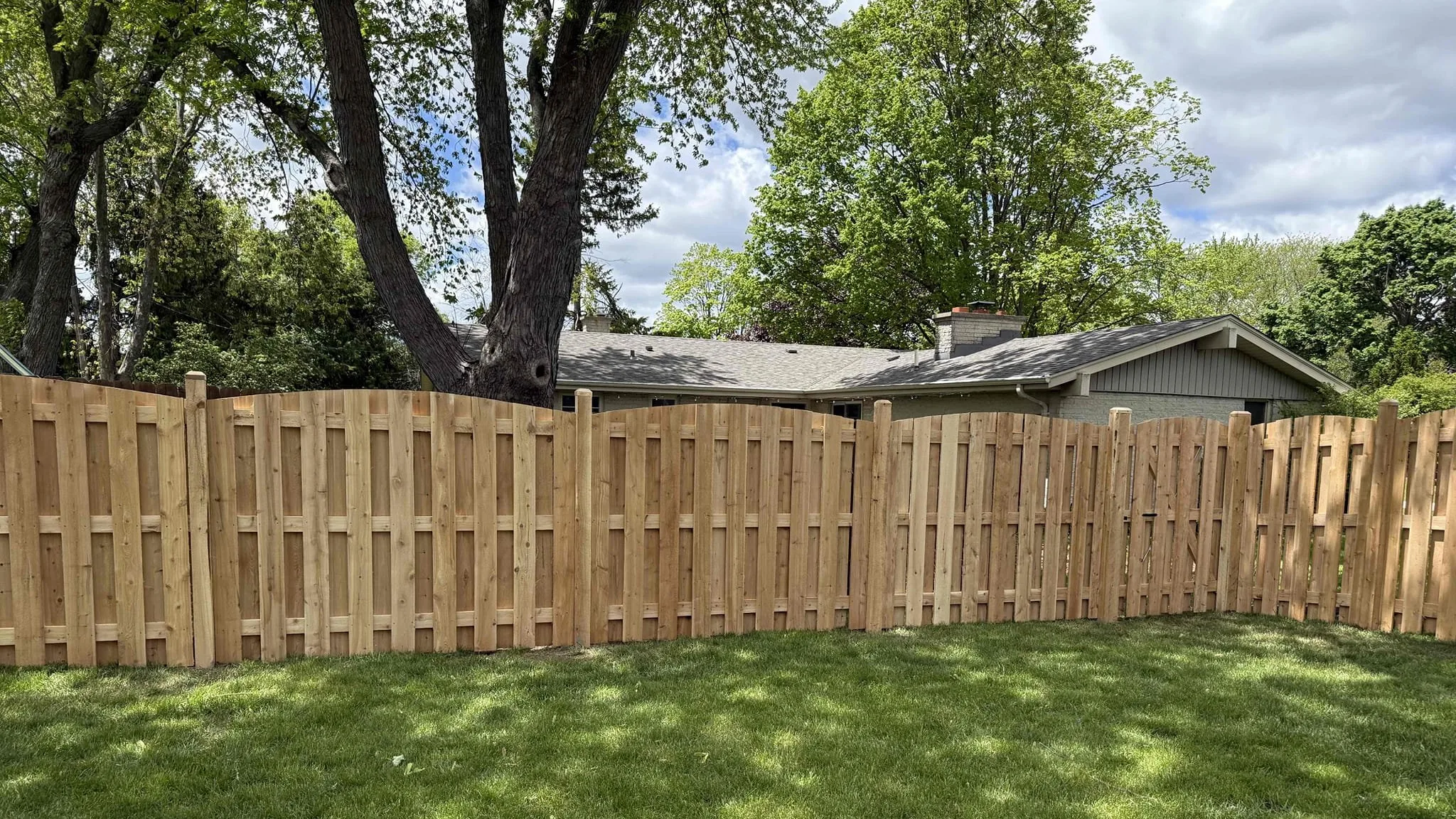
Wood privacy fences come in several styles differing in construction, airflow, and appearance. Your choice should reflect desired privacy, neighborhood context, and build complexity. Main styles include board-on-board, stockade, horizontal slat, shadowbox, and lattice-top privacy. Comparing privacy, airflow, aesthetics, and cost helps prioritize maximum sightline blockage, a modern look, or a neighbor-friendly solution. The table and subsections detail construction to match the style to site conditions and HOA rules.
Here’s how common wood privacy fence styles compare across privacy, airflow, and visual character:
| Fence Style | Privacy Level | Airflow |
| Board-on-board | Very high — minimal gaps | Low airflow |
| Stockade (solid pickets) | High — closed tops and sides | Low airflow |
| Horizontal slat | High with spacing options | Moderate airflow |
| Shadowbox (good-neighbor) | Medium–high — semi-private | High airflow |
This comparison shows how construction affects privacy and microclimate, helping you choose between a fully sealed barrier and a more neighbor-friendly design.
For a balance of privacy and neighborly design, shadowbox fences use alternating boards on either side of the rails, offering semi-privacy and improved airflow. This dual-sided finish is aesthetically pleasing to both properties and reduces wind load, making it a popular choice where full seclusion isn't the sole priority.
The sections below describe each style in practical terms.
What Is a Board-on-Board Privacy Fence and How Does It Deliver Ultimate Seclusion?
Board-on-board fences create seclusion by overlapping alternating boards on each side of the rails, visually interlocking to close gaps. This blocks sightlines while allowing expansion/contraction, spreading wind loads, and presenting a continuous face. It pairs well with cedar or quality pressure-treated lumber for lifespan and traditional appearance.
How Do Stockade Privacy Fences Combine Tradition and Security?
Stockade fences use closely set vertical pickets, often pointed or capped, attached directly to rails for a continuous solid barrier. They balance traditional look, affordability, and solid privacy. Straightforward construction makes them easier to repair, though boards can gap if they warp or shrink. Stockade designs are commonly accepted in neighborhoods.
Why Are Horizontal Wood Privacy Fences a Modern Privacy Solution?
Horizontal slat fences deliver privacy with tight spacing and substantial horizontal members, creating a clean, modern aesthetic. Slats can be spaced for controlled light/airflow or use reverse-splined joints for a near-solid appearance; metal posts improve straightness. These systems require precise installation and attention to seasonal board movement. Weigh higher installation precision and potential cost against strong visual payoff and design flexibility. The next section covers the material choices common to all these styles.
What Are the Best Wood Materials for Privacy Fences?
Choosing the right wood species or treated lumber is crucial for durability, insect/rot resistance, and maintenance. Top choices include naturally durable cedar and budget-friendly pressure-treated pine; spruce is economical but has lower lifespan expectations. Comparing durability, insect resistance, lifespan, and cost helps match material to climate, especially in areas with freeze/thaw cycles and frequent moisture. The table below summarizes common wood choices.
Common wood types for privacy fences and what they offer:
| Wood Type | Durability | Typical Lifespan |
| Cedar | High natural rot and insect resistance | 15–25 years with maintenance |
| Pressure-treated pine | Moderate — chemical protection against rot | 15–20 years with care |
| Spruce | Low natural resistance — economical | 8–12 years, depending on conditions |
| Redwood (where available) | High natural durability and dimensional stability | 20+ years with maintenance |
The table highlights cedar as a strong mix of durability and good looks, while pressure-treated pine offers budget-minded protection. The sections that follow dive into cedar’s benefits and how softwoods compare for specific regional concerns.
Why Is Cedar Wood Ideal for Durable and Insect-Resistant Privacy Fences?
Cedar contains natural oils and a cellular structure resisting rot and insects, making it ideal for longevity and reduced chemical treatment. Cedar takes stains and finishes evenly, preserving warm tones and showing less weathering when sealed. In colder, wetter climates, its dimensional stability helps prevent cupping and visual gaps. Higher initial cost is often offset by less frequent maintenance and an upgraded appearance.
How Do Pine, Spruce, and Pressure-Treated Lumber Compare for Privacy Fencing?
Pine and spruce offer cost advantages but usually need pressure treatment or regular sealing to approach cedar’s service life; untreated softwoods are vulnerable to rot and insects. Pressure-treated lumber is infused with preservatives, making it a solid budget option for posts, rails, or full panels where periodic staining is acceptable. Spruce is inexpensive but less durable. Choice depends on priorities: lower upfront cost vs. lower long-term maintenance and higher visual quality. The next section explains installation best practices to protect whichever material you pick.
How to Install and Maintain Your Wood Privacy Fence for Long-Lasting Privacy?
Good installation and routine maintenance are key to a long-lived wood privacy fence. Important installation factors include correct post depth, drainage planning, using the right fasteners, and checking local permits/utilities. These choices reduce freeze/thaw damage and leaning posts. Regular cleaning, staining/sealing, and fastener checks prevent small problems from becoming structural failures. The table below offers a practical maintenance checklist.
Use this practical maintenance schedule as a starting point:
| Maintenance Task | Frequency | Tools/Materials Needed |
| Clean and rinse the fence | Annually (spring) | Pressure washer or hose, mild detergent |
| Inspect and tighten fasteners | Twice yearly | Screwdriver, replacement screws/nails, galvanized fasteners |
| Stain or seal panels | Every 2–4 years | Exterior stain or sealer, brush/roller |
| Repair/replace damaged boards | As needed | Matching boards, saw, hammer, fasteners |
This schedule favors proactive care to prevent rot and keep your fence functioning and looking its best through changing seasons. The following subsection covers key installation details for cold-climate sites.
What Are the Key Installation Considerations for Wood Privacy Fences in Wisconsin?
In Wisconsin’s freeze/thaw environment, set posts below the frost line or use concrete footings to reduce heaving. Proper drainage and grading, like gravel backfill and sloping panels, limit wood contact with moisture. Choose corrosion-resistant fasteners and ground-contact treated posts. Mark utilities and secure permits before digging. Winter installation is possible with experienced crews. These practices feed directly into seasonal maintenance.
What Maintenance Practices Extend the Life of Wood Privacy Fences?
Routine maintenance centers on cleaning, timely sealing/staining, and repairing small issues. Each spring, inspect and clean to remove mildew and debris, then tighten fasteners and correct minor board movement before sealing. Apply a UV-protective stain or sealer every 2–4 years to shield wood from sun/water, reduce splitting, and preserve color; choose breathable finishes. Following a seasonal checklist and prompt repairs keeps privacy intact and minimizes larger replacement costs.
How Can You Choose the Right Wood Privacy Fence for Your Home?
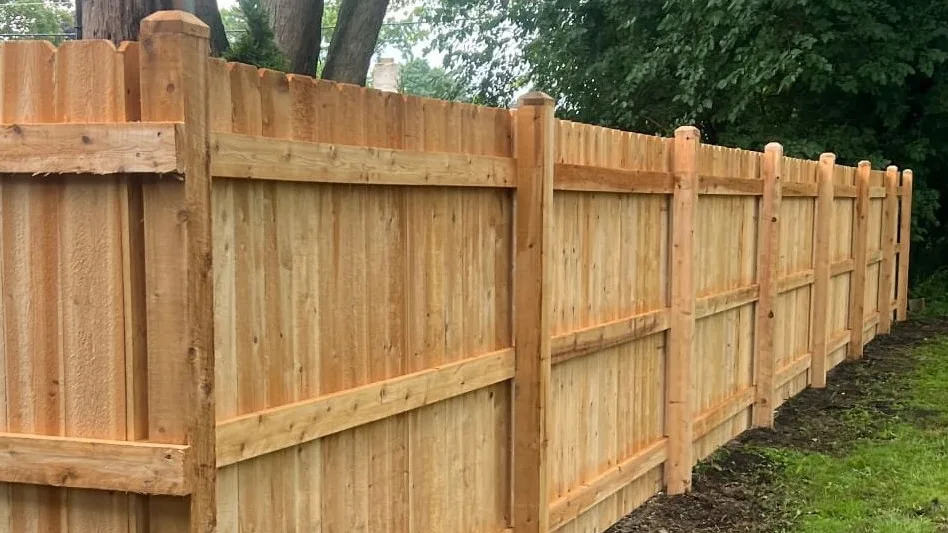
Picking the right wood privacy fence balances budget, privacy needs, maintenance willingness, HOA rules, and climate resilience. Start with a ranked checklist: privacy requirement, style preference, expected lifespan, and maintenance commitment. Match these priorities to fence styles and materials. Factor in installation complexity and local installer capabilities. Insist on transparent pricing and seasonal installation options. Below are practical factors, followed by a cost-and-durability comparison and next steps for estimates.
Key decision factors homeowners should weigh:
- Desired privacy level: Fully sealed panels for maximum seclusion or partial options for airflow.
- Budget vs. lifespan: A Higher upfront cost for cedar or redwood often means lower long-term maintenance.
- Maintenance tolerance: How often you’re willing to stain, seal, and inspect.
- Neighborhood rules: HOA or municipal limits on height and style.
This checklist helps narrow choices to the styles and materials that best match your priorities. The following subsection summarizes common cost and durability trade-offs.
What Factors Should Homeowners Consider When Selecting a Wood Privacy Fence?
Homeowners should assess functional needs (privacy, containment, wind buffering), aesthetic goals (traditional vs. modern), and practical limits (budget, maintenance ability, local codes). Site specifics—drainage, slope, exposure to winds, affect post depth, and material choices. Maintenance expectations matter: if you don’t want to stain every few years, pick naturally durable species or plan for replacement. Prioritizing these factors produces a short list of styles and materials.
How Do Different Wood Fence Types and Materials Compare in Cost and Durability?
Different combinations of style and material create clear profiles: cedar board-on-board offers high durability and a premium look at a higher initial cost; pressure-treated stockade balances lower upfront cost with preservative protection; horizontal slat systems often cost more due to installation precision but offer contemporary curb appeal. Match buyer types: budget-minded buyers often choose pressure-treated stockade; low-maintenance seekers favor cedar or metal-supported posts; design-forward owners pick horizontal slats. Request transparent estimates that include Immediate, Firm Pricing and consider installers offering winter installation expertise. If you want a formal quote, request an estimate from Yutka Fence. We emphasize clear pricing, a hands-on style display, and regional installation experience across Southeast Wisconsin and Northern Illinois.
Research on Timber Fence Durability
Studies prognosticate varying service lives for wooden fence components based on wood species (Norway spruce, Scots pine, Douglas fir heartwood) and environmental factors like orientation and height above ground. Significant differences in durability are observed across species and conditions.
Service life of timber components: prognosis based on 3 years high-frequency monitoring, 2013
- Request an estimate that includes clear pricing and scope: Make sure bids are apples-to-apples.
- Ask about seasonal installation options: Winter installation expertise can open scheduling flexibility.
- Confirm local references or view a display of styles: Seeing real samples helps decision-making.
These steps turn your selection into concrete next actions with measurable criteria for choosing an installer who matches your project goals.
Frequently Asked Questions
What is the average lifespan of a wood privacy fence?
Lifespan depends on the wood type and maintenance. Cedar lasts 15–25 years; pressure-treated pine lasts 15–20 years; spruce lasts 8–12 years. Regular cleaning and sealing extend service life.
How can I enhance the durability of my wood privacy fence?
Enhance durability by choosing cedar or redwood, setting posts below the frost line with concrete, and performing consistent maintenance. Clean annually, inspect, and apply protective stain/sealer every 2–4 years. Use ground-contact treated posts and corrosion-resistant fasteners.
What are the best practices for maintaining a wood privacy fence?
Maintain annually by cleaning (spring), checking fasteners (twice yearly), and staining/sealing every 2–4 years. Promptly repair damaged boards. Use breathable finishes to allow moisture escape.
Can I install a wood privacy fence myself, or should I hire a professional?
DIY is possible for confident homeowners, but professionals offer experience with terrain, local codes, post depth, and material insights. Research techniques for DIY; consider climate effects.